
The Rise of Reptiles
A New Ecological Era
Introduction
Millions of years ago, Florida belonged to predators. Giant crocodiles lurked in ancient rivers. Megalodons hunted off the coasts. Massive birds of prey circled overhead and terror birds competed alongside saber-toothed cats, dire wolves, and bear-dogs.
Eventually, the era of megafauna collapsed. Humans spread across North America and the climate warmed. The more resilient organisms survived and generalists beat specialists. Survival increasingly favored flexibility and adaptability. Species unable to adjust eventually died off.
Today, Florida is entering another ecological transition. Temperatures continue to rise and the state is gradually shifting toward a more tropical future. Mangroves are replacing salt marshes as they move northward. Sea levels are reshaping coastlines and wetlands. Novel ecosystems are beginning to emerge across the peninsula, driven by climate change, invasive species, and human development.
Florida is becoming hotter, wetter, and more unpredictable, and environmental conditions are increasingly favoring cold blooded-animals.
Reptile Resilience
Reptiles have survived in Florida for millions of years.
They have endured changing climates, rising seas, and environmental instability. Apart from Florida naturally being ideal reptile habitat, their biology makes them exceptionally suited for survival.
As ectotherms (cold-blooded animals), reptiles do not burn energy to generate body heat like mammals and birds. Instead, they rely on external temperatures. Because of this, reptiles require only a fraction of the food that mammals or birds need. An adult alligator can go several months, sometimes over a year, without a single meal, giving reptiles like this alligator an advantage during ecological stress or food shortages.
Modern research has also found that crocodilians - the umbrella term that includes crocodiles, alligators, caimans, and gharials - have highly unique immune systems and antibacterial blood properties. These adaptations allow them to survive severe wounds and infections while living in stagnant, bacteria-heavy wetlands.
Reptiles are also resistant to dehydration. Unlike mammals, they do not sweat or lose water through their skin, preventing moisture loss. They can survive months without drinking water and are biologically adapted for harsh environmental conditions.
Certain reptiles possess specialized sensory systems that further improve survival. Pythons have heat-sensing organs to detect infrared signatures from warm-bodied prey. Crocodilians have thousands of pressure-sensitive receptors along their jaws that can detect vibrations in the water. Snakes and lizards also use the Jacobson’s organ in the roof of their mouths, allowing them to process airborne chemical particles and effectively track prey in complete darkness.
The Rise of Reptiles
For much of modern Florida history, the state’s dominant apex predators were mammals. Panthers and black bears shaped the interior wilderness while wolves and large predators once moved through the Southeast. But Florida’s ecosystems are changing again.
As temperatures rise, wetlands expand, invasive species spread, and urban development reshapes the land, reptiles are increasingly becoming some of the state’s most adaptable survivors.
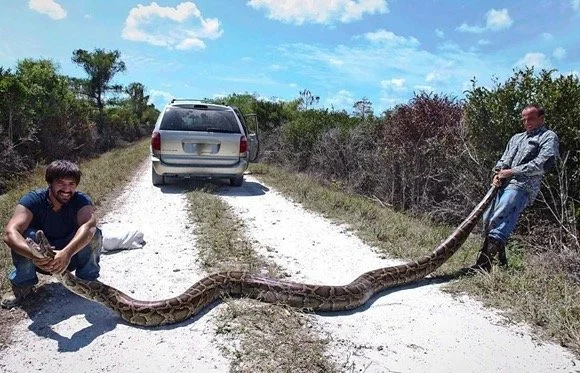
The Burmese Python
The invasive Burmese python has successfully colonized parts of South Florida. Introduced through the exotic pet trade during the 1970s and 1980s, this apex predator now faces nearly no natural predators within the Everglades ecosystem.
Research has linked python expansion to major declines in native mammal populations throughout parts of the Greater Everglades. These snakes are highly adaptable predators capable of feeding on birds, deer, alligators, rabbits, raccoons, and even other snakes. Burmese pythons can also survive for months without eating. Like other snakes, the Burmese python has learned to shelter inside underground burrows during winter cold fronts, like those created by the Gopher Tortoise and Nine-banded Armadillo.
Pythons are extremely difficult to locate in the wild, with some researchers estimating detection rates at only around 1 percent. To combat this, biologists have begun using “scout snakes” — tagged male pythons released back into the environment to locate breeding females during mating season. Once females are found, researchers can remove them before they lay clutches that may contain nearly 100 eggs.
Although the Florida Fish and Wildlife Conservation Commission has removed over 23,000 pythons from the wild, the species continues to expand. Current scientific estimates place the population somewhere between 30,000 and 300,000 snakes across the Greater Everglades region.
As prey populations decline in heavily infested areas, one of the few natural limits on python expansion may eventually become carrying capacity. However, that pressure could also trigger the species to gradually move farther north into regions where prey remains abundant.
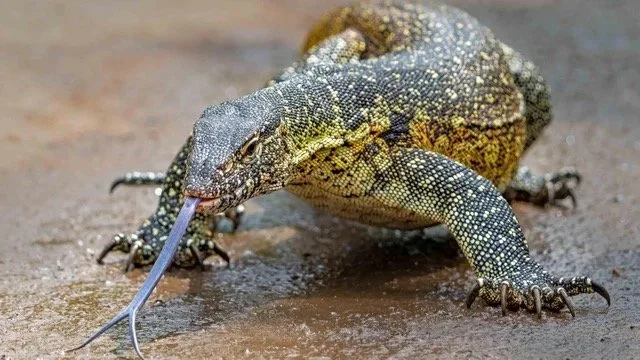
The Nile Monitor Lizard
Nile monitor lizards have also established invasive populations across parts of Florida. Cape Coral has become one of their strongest footholds, where canals, retention ponds, and suburban waterways provide ideal habitat. According to EDDMapS data, Lee County leads the state in reported sightings, while populations have also been documented in Palm Beach County, Miami-Dade, and Broward County.
Nile monitors are highly adaptable reptiles with traits that make them effective predators and survivors. They possess strong swimming abilities, high-set nostrils that function almost like snorkels, continuously replacing teeth, powerful tails used for defense and movement, and unusually advanced problem-solving behavior for reptiles. They can sprint up to 28 miles per hour while also climbing and swimming efficiently.
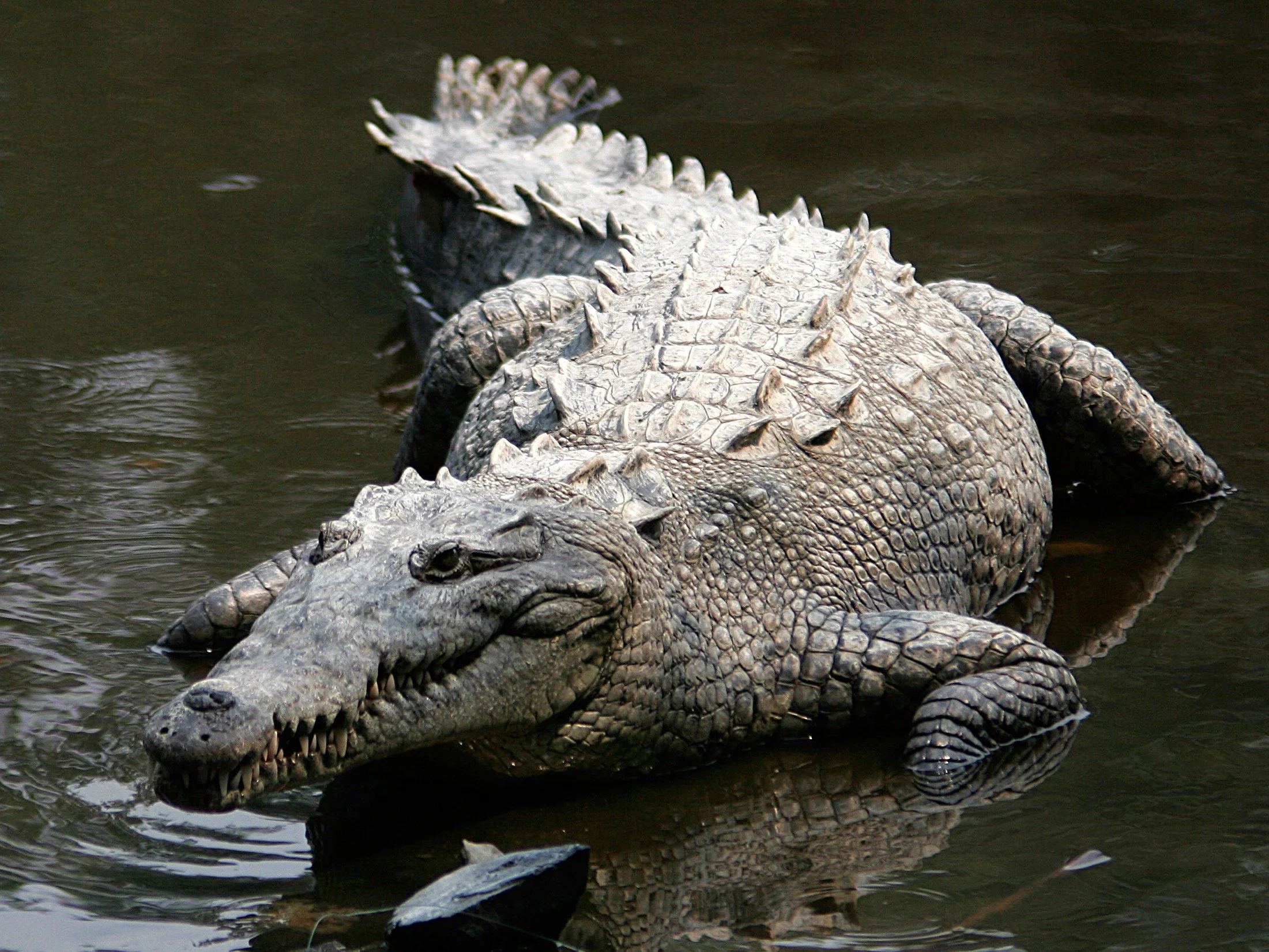
The American Crocodile
Unlike pythons and monitors, the American crocodile is native to Florida. Once heavily threatened by habitat loss and hunting, the species has made a significant recovery in recent decades. Today, biologists estimate that roughly 2,000 to 3,000 crocodiles inhabit South Florida.
Several unusual factors contributed to the species’ recovery. Protected status, wetland restoration efforts, and even industrial sites like the Turkey Point Nuclear Power Plant near Miami unintentionally created stable nesting habitat and warm-water refuge areas.
As South Florida’s climate continues warming, crocodiles are gradually expanding farther north along the coasts. Rising sea levels may also push nesting activity toward higher and drier ground, which could mean expanding into northern Florida territory.
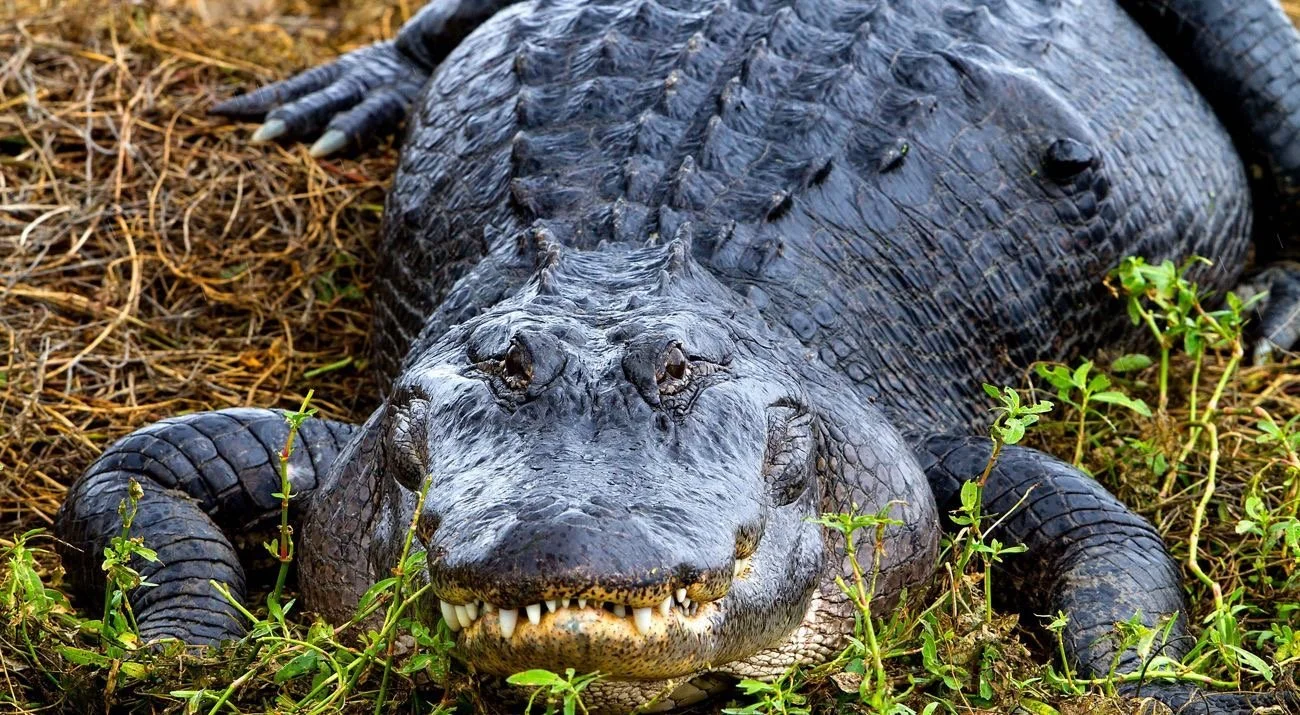
The American Alligator
The American alligator remains one of Florida’s most important reptiles and one of the state’s greatest conservation success stories. After being pushed near extinction by overhunting during the mid-20th century, legal protections helped the species rebound across the Southeast.
Today, the total U.S. alligator population exceeds five million animals, with roughly 1.3 million inhabiting Florida alone.
Alligators are considered keystone species because entire wetland ecosystems depend on them. Their nesting behavior creates habitat for other animals, while “gator holes” — basins formed by alligators during dry periods — provide refuge for fish, birds, turtles, and countless aquatic organisms.
Florida’s Future
Florida’s future will likely look far different from the state many people imagine today. Temperatures continue to rise and the peninsula is gradually shifting toward a more tropical climate. Sea levels will permanently alter the state’s geography through flooding, erosion, and saltwater intrusion.
The future landscape may become a patchwork of mangrove coastlines, engineered flood systems, sprawling suburbs, retention ponds, and surviving wetlands.
As these changes accelerate, scientists are increasingly recognizing Florida as a “novel ecosystem” — an environment shaped not only by nature, but also by climate change, invasive species, and human infrastructure. Native and nonnative species now exist side by side in ways that have little historical precedent.
Canals, highways, drainage systems, golf courses, and suburban developments have unintentionally created entirely new ecological niches. Some species struggle within these altered systems, while others thrive.
In this changing Florida, environmental pressures will not affect all animals equally. Heat, flooding, habitat fragmentation, and instability may increasingly favor species capable of surviving extreme and disturbed conditions. Reptiles, already biologically efficient and highly adaptable, are becoming increasingly positioned to succeed within the ecosystems now emerging across the state.
Florida has never been environmentally static. The peninsula has always been shaped by rising seas, shifting climates, extinctions, and the arrival of new species. But the speed of change now unfolding is unlike anything in modern history.
The question is no longer whether Florida is changing. The question is what kinds of life will be most capable of changing with it.
Conclusion
Florida’s wilderness is not disappearing — it is transforming. The species that thrive in the decades ahead will likely be the ones most capable of surviving heat, instability, flooding, rising seas, and landscapes increasingly shaped by humans.
Reptiles have already endured millions of years of environmental upheaval. Now, both native and invasive species are finding opportunities within the new conditions emerging across the state. Animals like the Burmese python and Nile monitor are multiplying alongside long-established survivors such as the American alligator and American crocodile, creating an increasingly competitive and unpredictable ecosystem. But this “battle of the reptiles” is a story for another time.
As Florida becomes hotter, wetter, and more tropical, the balance of power within its wilderness may continue shifting toward cold-blooded survivors. The next ecological era of Florida may not belong to the mammals that once dominated the state, but to the reptiles that proved they could outlast everything else.